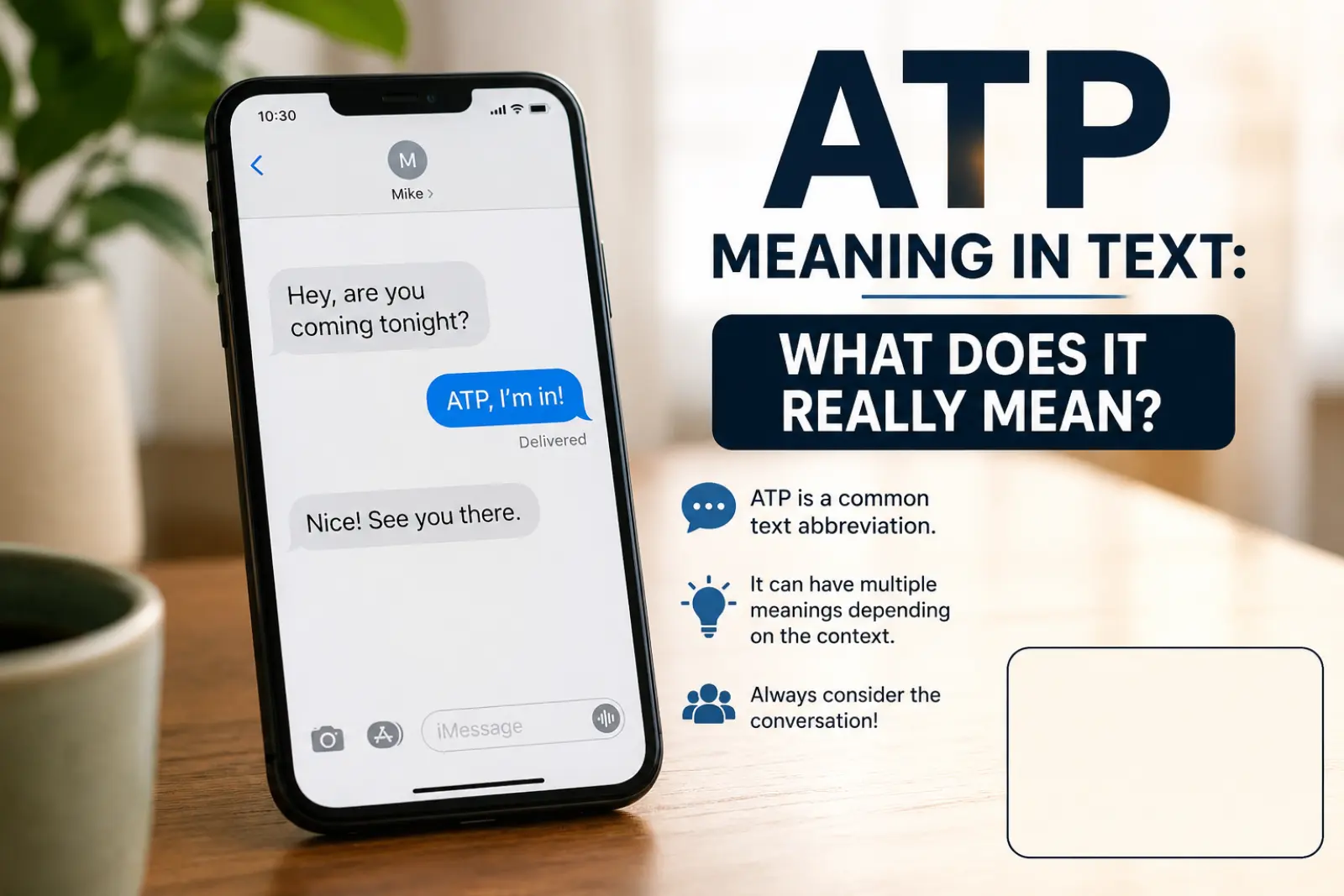
ATP meaning in text is a common search because slang changes quickly, and abbreviations often have multiple meanings depending on where they’re used. If you’ve seen someone type “ATP” in a message, TikTok comment, Snapchat, or Instagram caption, you may wonder whether it’s positive, rude, or something completely different.
The confusion is understandable. Unlike standard abbreviations, ATP can mean different things in texting, social media, sports, or even science. Context matters a lot.
Understanding slang helps avoid awkward misunderstandings and improves online communication, especially among younger users who use shorthand constantly.
Quick Answer:
In texting and social media, ATP usually means “At This Point.” People use it to express frustration, opinion, acceptance, or describe a situation currently happening.
What Does ATP Mean in Text?
The most common ATP meaning in text is:
ATP = At This Point
People use it when talking about a current situation, expressing emotion, or showing resignation.
Examples:
- “ATP, I’m just going to stay home.”
- “ATP we should cancel the plans.”
- “I don’t even care ATP.”
In these examples, ATP replaces “at this point” to make messages shorter and faster.
ATP Full Form: What Does ATP Stand For?
Depending on context, ATP can have multiple meanings.
| ATP Full Form | Meaning | Common Usage |
|---|---|---|
| At This Point | Current situation or opinion | Texting, social media |
| Association of Tennis Professionals | Professional tennis organization | Sports |
| Adenosine Triphosphate | Energy molecule in biology | Science |
| Answer The Phone | Request to pick up a call | Informal texting (less common) |
When people ask “what does ATP stand for in text?”, the answer is usually:
ATP = At This Point
ATP Meaning in Different Contexts
Context changes everything.
1. ATP in Text Messages
Meaning:
At This Point
Example:
“ATP I’m tired of explaining.”
This suggests frustration or emotional exhaustion.
2. ATP on TikTok or Instagram
Social media users often write:
- “ATP just block him.”
- “ATP she deserves better.”
The phrase often carries opinions or judgment.
3. ATP in Sports
In tennis:
ATP = Association of Tennis Professionals
Example:
“He moved up in ATP rankings.”
This has nothing to do with texting slang.
4. ATP in Science
In biology:
ATP = Adenosine Triphosphate
It refers to cellular energy.
Example:
“ATP provides energy for cells.”
Again, completely unrelated to messaging.
Is ATP Rude, Offensive, or Neutral?
ATP itself is generally neutral.
However, tone matters.
Examples:
Neutral:
“ATP we should leave.”
Frustrated:
“ATP I’m done arguing.”
Dismissive:
“ATP nobody cares.”
So ATP isn’t offensive by default, but the surrounding sentence can sound rude.
Where Is ATP Commonly Used?
You’ll often see ATP on:
- Snapchat
- TikTok
- Instagram comments
- Twitter/X posts
- Text messages
- Group chats
- Discord conversations
Younger users and online communities use ATP frequently because abbreviations save time.
Emotional and Psychological Meaning Behind ATP
Interestingly, ATP often signals emotion.
People use it when they feel:
- Frustrated
- Tired
- Impatient
- Accepting reality
- Defeated
- Annoyed
- Resigned
Example:
“ATP I’ve stopped expecting replies.”
This implies emotional disappointment.
So ATP often communicates more than words—it shows mindset.
Origin and Background of ATP Slang
The slang version of ATP likely developed through texting culture where shortening phrases became normal.
Similar evolutions include:
- IMO → In My Opinion
- TBH → To Be Honest
- IDK → I Don’t Know
“As texting grew faster, At This Point naturally became ATP.”
Social media platforms accelerated its popularity.
Comparison With Similar Slang Terms
ATP resembles other opinion-based abbreviations.
| Slang | Meaning | Usage |
|---|---|---|
| ATP | At This Point | Current feeling or situation |
| TBH | To Be Honest | Honest opinion |
| IMO | In My Opinion | Personal viewpoint |
| NGL | Not Gonna Lie | Truthful admission |
| SMH | Shaking My Head | Disappointment |
Example:
ATP:
“ATP I’m leaving.”
NGL:
“NGL, I’m disappointed.”
TBH:
“TBH, you were right.”
Each carries a different emotional tone.
Why People Use ATP in Communication
Users prefer ATP because it is:
- Faster to type
- Common among younger audiences
- Useful for expressing emotion
- Efficient in casual chats
- Familiar on social media
Shortened slang creates informal, relaxed conversations.
Impact of Using Slang Like ATP
Positive effects:
✔ Faster communication
✔ Relatable tone
✔ Feels casual and friendly
✔ Builds group identity online
Negative effects:
✘ Confuses older audiences
✘ Can sound dismissive
✘ Easy to misunderstand
✘ Not ideal for professional settings
When to Use ATP and When to Avoid It
Use ATP When:
Good situations:
- Friends texting
- Social media posts
- Casual conversations
- Group chats
Example:
“ATP I need coffee.”
Avoid ATP When:
Not recommended for:
- Work emails
- Professional communication
- Academic writing
- Formal requests
Instead of:
“ATP I need an update.”
Write:
“At this point, I would appreciate an update.”
Polite Alternatives to ATP
If you want clearer communication, try:
Instead of ATP:
- Currently
- Right now
- At the moment
- Given the situation
- At present
These sound more professional.
Real-Life Examples of ATP Usage
Friendly Tone
“ATP we should plan a trip.”
Meaning: Suggesting something casually.
Casual Tone
“ATP I’m just watching Netflix.”
Meaning: Explaining current activity.
Frustrated Tone
“ATP I’m tired of arguing.”
Meaning: Emotional exhaustion.
Argumentative Tone
“ATP you’re ignoring the issue.”
Meaning: Criticism or frustration.
Humorous Tone
“ATP my wallet needs therapy.”
Meaning: Joke about spending money.
Usage in Different Contexts
Family Chat
“ATP dinner should already be ready.”
Relationship Conversation
“ATP we need to talk honestly.”
School Discussion
“ATP I need help with homework.”
Workplace Chat (informal)
“ATP we may miss the deadline.”
Common Misunderstandings About ATP
People sometimes assume ATP always means:
- Tennis rankings
- Biology energy molecule
- Phone-related slang
In texting, however, At This Point is usually correct.
Always check surrounding words.
Variations and Similar Forms
Related expressions include:
- ATM = At The Moment
- RN = Right Now
- TBH = To Be Honest
- NGL = Not Gonna Lie
These often appear in similar conversations.
How to Respond When Someone Uses ATP
If someone says:
“ATP I’m exhausted.”
Possible replies:
Supportive:
“You should rest.”
Understanding:
“I get why you feel that way.”
Lighthearted:
“Sounds like you need a break.”
Respond according to tone.
Regional and Cultural Usage
ATP slang appears mostly in:
- United States texting culture
- TikTok communities
- Gen Z online conversations
- English-speaking social media spaces
Its popularity varies by age group and platform.
Older users may not recognize it immediately.
Is ATP Safe for Social Media?
Yes. ATP is generally safe for:
- Instagram captions
- TikTok comments
- Snapchat messages
- Tweets
- Casual posts
Just remember:
Tone can affect interpretation.
FAQs About ATP Meaning in Text
What does ATP mean in text messages?
Usually, ATP means “At This Point.”
Is ATP slang rude?
No. ATP is neutral, but sentences using it may sound frustrated or dismissive.
What does ATP stand for on TikTok?
Most often:
ATP = At This Point
Can ATP mean something besides texting slang?
Yes. It can also mean:
- Association of Tennis Professionals
- Adenosine Triphosphate
- Answer The Phone
Is ATP professional language?
Not usually. Avoid using ATP in formal emails or business communication.
Why do younger people use ATP?
Because it saves time and fits casual online conversations.
Conclusion
Understanding the atp meaning in text becomes easier once you know the context. In most texting and social media situations, ATP means “At This Point.” People use it to express opinions, frustration, acceptance, or describe current circumstances.
Although ATP is generally harmless and common online, it may not fit professional conversations. Knowing when to use slang—and when to choose clearer language—helps improve communication and avoid misunderstandings.
The next time someone types “ATP,” you’ll know exactly what they mean.

I’m Amber Laughlin, a writer who lives to make words dance with humor and heart. I love creating clever puns and cheerful messages that brighten any day. My goal is to turn simple moments into smiles through playful writing. Every line I craft is meant to share laughter, warmth, and a little sparkle of joy.