hy meaning in text is something many people search when they receive messages like “hy,” “Hy there,” or simply “hy 😊.” Since texting slang evolves quickly, understanding what certain words mean helps avoid confusion or awkward replies.
In most cases, “hy” is simply an alternative spelling of “hi,” used as a casual greeting in text messages, social media, or online chats. However, depending on context, region, or typing habits, it can sometimes carry a slightly friendlier or informal tone.
People often wonder:
- Is “hy” different from “hi”?
- Does “hy” stand for something?
- Is it rude or inappropriate?
- Why do so many people use it online?
This guide explains everything in simple terms.
Quick Answer:
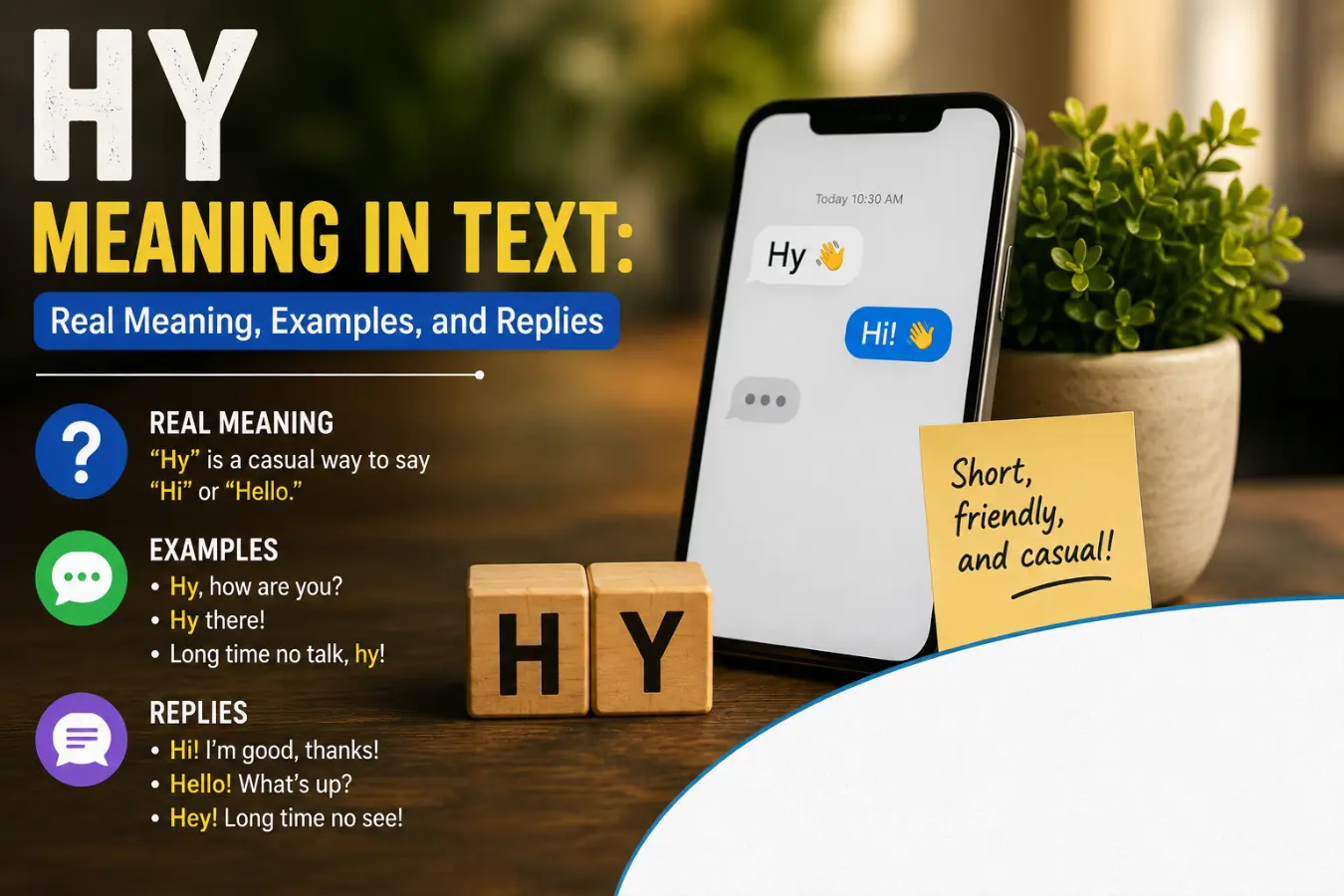
Hy meaning in text usually means “Hi,” a casual greeting used to start conversations online. It is informal, friendly, and commonly seen in texting or social media chats.
What Does hy Mean in Text?
The most common hy meaning slang is:
Hy = Hi (Hello)
It functions as a greeting, similar to:
- Hello
- Hi
- Hey
- Yo (very casual)
Example:
Person A: Hy
Person B: Hey! How are you?
In this situation, “hy” carries no hidden meaning. It simply begins a conversation.
hy Full Form: Does hy Stand for Anything?
Many users ask:
What does hy stand for?
Unlike abbreviations such as:
- LOL = Laugh Out Loud
- BRB = Be Right Back
- IMO = In My Opinion
Hy does not usually have an official full form.
The hy full form in texting is generally not an acronym. Instead, it is viewed as:
- A typo of “hi”
- An alternative spelling
- A stylized greeting
So:
| Term | Full Form | Meaning |
|---|---|---|
| HY | No official full form | Informal version of “Hi” |
| HI | Greeting | Hello |
| HEY | Greeting | Casual hello |
Meaning of hy in Different Contexts
The meaning can slightly change depending on where it appears.
1. Friendly Greeting
Most common use.
Example:
“Hy, what are you doing?”
Meaning:
“Hello, what are you doing?”
Tone: Friendly
2. Social Media Messaging
On Instagram, Snapchat, TikTok, or Facebook:
“Hy 😊”
May sound:
- Warm
- Casual
- Interested in conversation
Sometimes emojis influence the tone more than the word itself.
3. Romantic or Flirty Context
Example:
“Hy ❤️”
The greeting remains “Hi,” but emotional signals may suggest:
- Affection
- Interest
- Friendliness
Context matters.
4. Group Chats
Used casually to enter discussions:
“Hy everyone!”
Meaning:
“Hello everyone!”
Is hy Rude, Offensive, or Neutral?
Hy is generally neutral and harmless.
It is rarely considered rude.
Perception by context:
| Situation | Interpretation |
|---|---|
| Friend texting “Hy” | Friendly |
| Stranger messaging “Hy” | Neutral |
| Formal email | Unprofessional |
| Workplace chat | Too casual |
So while “hy” isn’t offensive, it may appear informal in professional settings.
Where Is hy Commonly Used?
You’ll often see “hy” on:
- Instagram DMs
- Snapchat
- TikTok comments
- Facebook Messenger
- Gaming chats
- Online forums
Young users and non-native English speakers often use “hy” instead of “hi.”
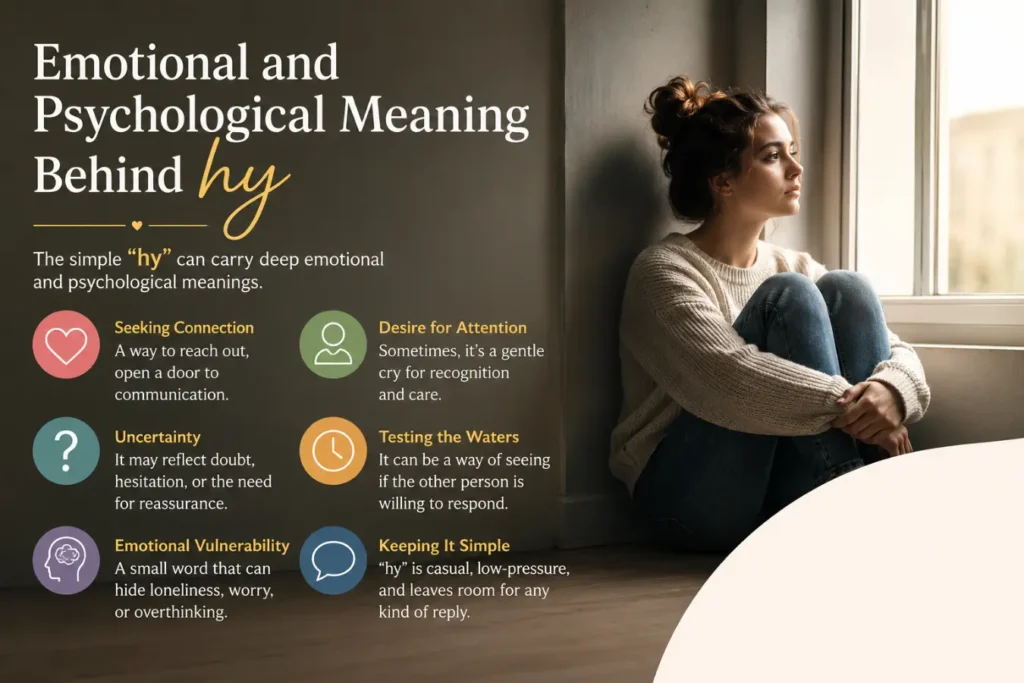
Emotional and Psychological Meaning Behind hy
Simple greetings can influence communication.
Using “hy” may signal:
Friendliness
People often use casual spellings to sound approachable.
Informality
It creates relaxed conversations.
Interest
Repeated greetings may indicate someone wants engagement.
Comfort
Many users type “hy” out of habit rather than intention.
Origin and Background of hy
There is no documented historical slang origin for “hy.”
Most experts believe it spread due to:
- Fast mobile typing
- Keyboard habits
- Non-native English usage
- Social media trends
Over time, repeated informal use normalized it.
Why People Use hy Instead of Hi
Common reasons include:
- Habit
- Personal texting style
- Typing speed
- Trend following
- Regional preferences
- Trying to appear friendlier
Some people simply prefer how “hy” looks.
Real-Life Conversation Examples
Friendly Example
Alex: Hy! Long time no talk.
Sara: Hey! Yes, how have you been?
Meaning: Warm greeting
Casual Exampl
User: Hy
Friend: What’s up?
Meaning: Starting conversation
Romantic Example
Person A: Hy ❤️
Person B: Hey, missed you.
Meaning: Affectionate tone
Argumentative Context
Person A: Hy, can we talk about yesterday?
Person B: Sure.
Greeting remains neutral despite serious discussion.
Professional Context
Message: Hy manager, I need leave tomorrow.
Less appropriate.
Better:
“Hello, I would like to request leave.”
Common Misunderstandings About hy
People often assume:
Misunderstanding 1:
HY is an acronym
Reality:
Usually false.
Misunderstanding 2:
Hy means flirting
Reality:
Not always.
Misunderstanding 3:
Hy is rude
Reality:
Generally harmless.
Misunderstanding 4:
Only teenagers use it
Reality:
Many age groups use informal greetings.
Variations and Similar Slang Terms
Users often confuse similar greetings.
| Slang | Meaning | Tone |
|---|---|---|
| Hy | Hi | Casual |
| Hi | Hello | Neutral |
| Hey | Informal hello | Friendly |
| Yo | Greeting | Very casual |
| Sup | What’s up | Relaxed |
| Hii | Extended hi | Friendly/warm |
| Heyy | Extra friendly or flirty | Emotional |
This comparison helps understand subtle texting differences.
Comparison: hy vs hi vs hey
| Feature | hy | hi | hey |
|---|---|---|---|
| Formality | Low | Medium | Low |
| Common in texting | Yes | Yes | Yes |
| Professional use | Rare | Acceptable | Limited |
| Emotional tone | Casual | Neutral | Friendlier |
When to Use hy and When to Avoid It
Appropriate Situations
Use “hy” when talking with:
- Friends
- Family
- Classmates
- Social media followers
- Gaming communities
Avoid Using hy In:
Avoid in:
- Job applications
- Professional emails
- Academic writing
- Business communication
- Formal requests
Use:
- Hello
- Good morning
- Hi
- Dear [Name]
instead.
Polite Alternatives to hy
If you need a more professional greeting:
Instead of Hy
Try:
- Hello
- Hi
- Good morning
- Good afternoon
- Greetings
- Dear Sir/Madam
Impact of Using Slang in Communication
Text slang changes communication style.
Positive effects:
✔ Makes chats quicker
✔ Feels relaxed
✔ Builds familiarity
Negative effects:
✘ Can appear unprofessional
✘ May confuse older audiences
✘ Can create misunderstandings
Balance matters.
Is hy Safe for Social Media?
Yes.
Hy is safe for social media platforms because it is generally a normal greeting.
However:
- Be careful when responding to strangers
- Avoid oversharing personal details
- Understand tone before assuming intentions
How to Respond When Someone Says “Hy”
Possible replies:
Friendly:
“Hey!”
Casual:
“Hi, how are you?”
Short:
“Hello 😊”
Professional:
“Hello, how can I help?”
Flirty:
“Hey, nice hearing from you.”
Response depends on relationship and context.
Regional and Cultural Usage
In some countries, especially where English is a second language, “hy” appears more often than “hi.”
Regions with frequent informal spelling may use:
- Hy
- Hii
- Heyy
without changing meaning.
Cultural texting habits influence spelling.
FAQs;
1. What does hy mean in text?
Usually, hy means “hi,” a casual greeting used to say hello online.
2. Is hy an abbreviation?
No. It generally is not an acronym and has no official full form.
3. Is saying hy rude?
No. It is considered informal rather than rude.
4. Why do people write hy instead of hi?
Mostly because of typing habits, personal preference, or social media trends.
5. Does hy mean flirting?
Not necessarily. Context, emojis, and conversation tone matter more.
6. Can I use hy in professional communication?
It’s better to use “Hello” or “Hi” in formal settings.
Conclusion;
Understanding hy meaning in text is simple once context is clear. In most conversations, “hy” is merely an informal way of saying “hi” or “hello.” It usually carries a friendly and neutral tone and appears often in social media, texting, and casual chats.
Although harmless, using “hy” in professional communication may seem too informal. The safest approach is to consider the platform, relationship, and purpose of the conversation.
When used correctly, “hy” helps create relaxed and approachable communication—just like many other modern texting slang terms.

I’m Amber Laughlin, a writer who lives to make words dance with humor and heart. I love creating clever puns and cheerful messages that brighten any day. My goal is to turn simple moments into smiles through playful writing. Every line I craft is meant to share laughter, warmth, and a little sparkle of joy.