Fein meaning in text is a popular internet slang phrase that many people search for after seeing it on TikTok, Snapchat, Instagram, X, or in text messages.
Slang terms evolve quickly online, and “fein” has become one of those words that can confuse people who are not familiar with modern internet culture.
If you’ve received a message containing “fein” or noticed people commenting it on social media posts, you may wonder what it actually means and whether it’s positive, negative, or simply casual slang.
Understanding the meaning behind online expressions helps you communicate more effectively and avoid misunderstandings.
Quick Answer
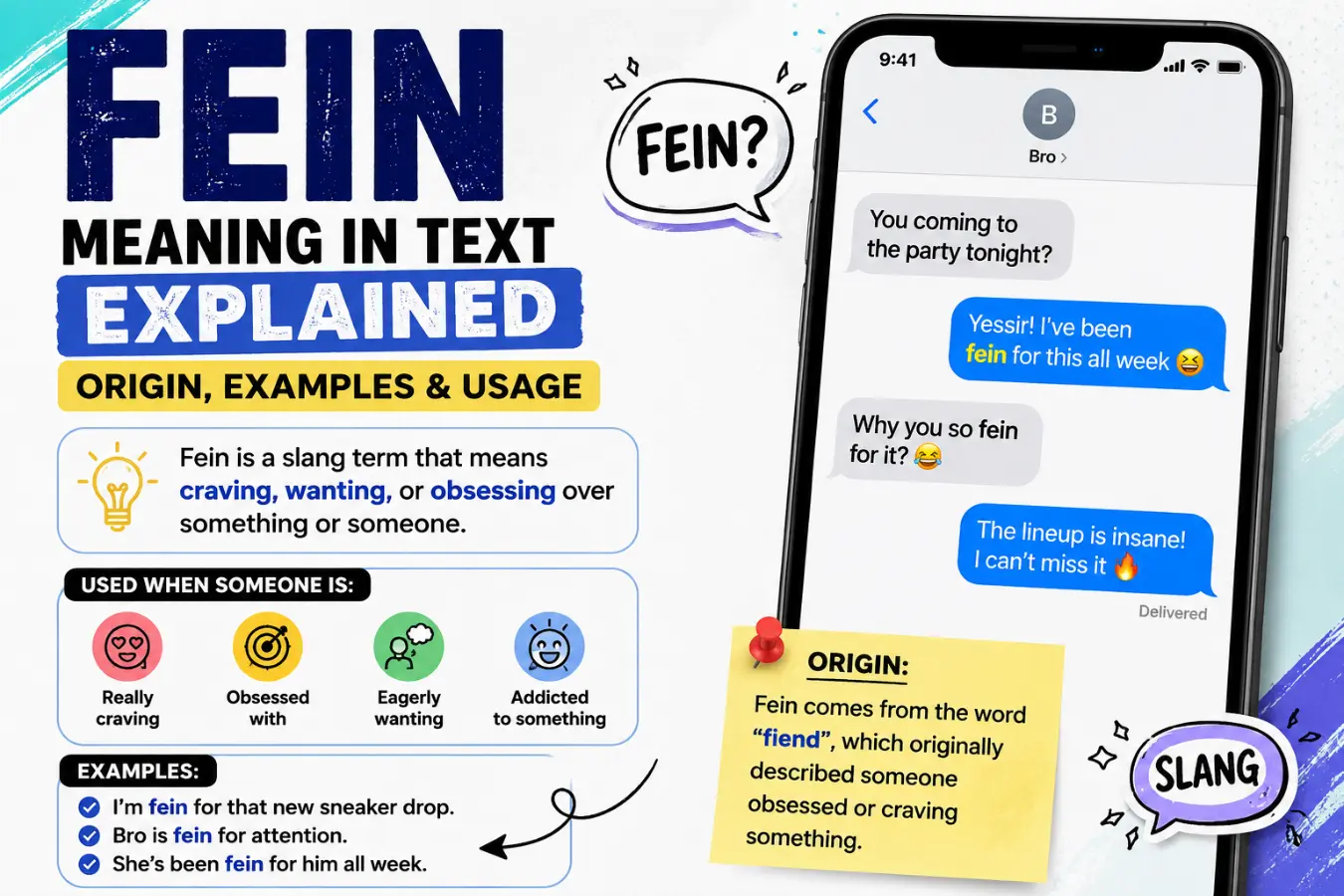
In text slang, “fein” usually means someone is strongly craving, obsessing over, or desperately wanting something. It comes from the word “fiend,” which is often used to describe someone who is extremely eager or addicted to something.
What Does Fein Mean in Text?
The fein meaning in text generally refers to a person who is intensely interested in, craving, or obsessed with something.
When someone says:
- “You’re feining for that game.”
- “He’s a fein for attention.”
- “She’s feining over those concert tickets.”
They usually mean the person wants something very badly or cannot stop thinking about it.
In many online conversations, “fein” is simply a shortened or alternate spelling of “fiend.”
Fein Full Form and Definition
Many users search for:
- Fein full form
- What does fein stand for?
- Fein meaning slang
The truth is that fein is not an acronym and does not have a full form. It is a slang term derived from “fiend.”
Definition
Fein (slang): A person who strongly craves, desires, or is obsessed with something.
Depending on the context, it may describe:
- Excitement
- Obsession
- Addiction-like behavior
- Strong desire
- Extreme enthusiasm
Meaning in Different Contexts
The meaning of “fein” can change slightly depending on how it is used.
Social Media Context
On TikTok or Instagram, people often use it jokingly.
Example:
“Bro is feining for likes.”
Meaning: Someone is desperately seeking attention or engagement.
Friendship Context
Friends may use it playfully.
Example:
“You’re feining for pizza again.”
Meaning: You really want pizza.
Romantic Context
Example:
“She’s feining for his texts.”
Meaning: She eagerly waits for his messages.
Gaming Context
Example:
“He’s feining to play the new update.”
Meaning: He is very excited to play.
Is Fein Rude, Offensive, or Neutral?
In most situations, fein is considered neutral slang.
However, context matters.
Usually Neutral
- Casual conversations
- Friendly jokes
- Social media comments
Potentially Negative
Sometimes it implies desperation or unhealthy obsession.
Example:
“Stop feining for attention.”
This can sound insulting because it suggests someone is seeking validation excessively.
Rarely Offensive
The term is generally not considered offensive, but it can come across as mocking if used aggressively.
Where Is Fein Commonly Used?
You will often see “fein” in:
- TikTok comments
- Snapchat chats
- Instagram captions
- YouTube comments
- Online gaming communities
- Group chats
- Text messages
Its popularity increased as internet culture adopted casual and abbreviated slang terms.
Real-Life Conversation Examples
Friendly Example
Friend 1: “Want some ice cream?”
Friend 2: “Yes! I’ve been feining for it all day.”
Casual Example
Person A: “The new season drops tomorrow.”
Person B: “I’ve been feining for this.”
Argumentative Example
Person A: “Why do you keep posting selfies?”
Person B: “Why are you acting like I’m feining for attention?”
Gaming Example
Player 1: “Ready for the update?”
Player 2: “Absolutely. I’ve been feining all week.”
Emotional and Psychological Meaning
The popularity of “fein” reflects how people communicate emotions online.
The term often expresses:
- Excitement
- Anticipation
- Desire
- Obsession
- Impatience
People use slang because it communicates feelings quickly and emotionally.
Instead of saying:
“I strongly desire that.”
Many people simply say:
“I’m feining for it.”
The slang feels more relatable and expressive in digital communication.
Origin and Background of the Slang
The fein meaning slang originates from the word “fiend.”
Historically, “fiend” referred to an evil spirit or demon. Over time, the word evolved and gained a slang meaning.
In modern slang, a “fiend” became someone who intensely craves something.
Examples:
- Coffee fiend
- Sports fiend
- Music fiend
As texting and social media grew, alternate spellings such as “fein” became common.
TikTok trends, memes, and online communities helped spread the term to a wider audience.
Fein vs Similar Slang Terms
| Slang Term | Meaning | Tone |
|---|---|---|
| Fein | Craving or obsessing over something | Casual |
| Simp | Excessively devoted to someone | Often negative |
| Glazing | Over-praising someone | Humorous |
| Thirsty | Seeking attention or romance | Slightly negative |
| Obsessed | Strong interest in something | Neutral |
| Addicted | Unable to stop wanting something | Stronger meaning |
The closest slang equivalent to “fein” is often “obsessed” or “craving.”
When to Use Fein
Using the term can make your conversations sound more natural if you’re speaking with people familiar with internet slang.
Good situations include:
- Casual texting
- Social media comments
- Friendly conversations
- Gaming discussions
- Meme culture
Examples:
- “I’m feining for the weekend.”
- “She’s feining for those sneakers.”
- “We’re all feining for the next episode.”
When to Avoid Using Fein
Avoid using it in:
- Professional emails
- Business meetings
- Academic writing
- Formal presentations
- Job applications
In formal situations, clearer language is usually better.
Instead of:
“I’m feining for this opportunity.”
Use:
“I’m excited about this opportunity.”
Polite Alternatives to Fein
If you want a more professional expression, try:
- Looking forward to
- Excited for
- Interested in
- Eager for
- Enthusiastic about
- Anticipating
Example:
Instead of “I’m feining for vacation.”
Say:
“I’m really looking forward to my vacation.”
Why People Use This Slang
There are several reasons why internet users prefer slang like “fein.”
It Saves Time
Shorter phrases are faster to type.
It Sounds Trendy
People often adopt popular internet expressions.
It Adds Emotion
The word conveys excitement and desire more strongly than formal language.
It Creates Social Connection
Shared slang helps people feel connected to online communities.
Impact of Using Slang in Communication
Slang can make communication:
More Engaging
Messages feel more personal and expressive.
More Relatable
People often connect with informal language.
Potentially Confusing
Not everyone understands newer slang terms.
Context-Dependent
The same slang can have different meanings depending on the audience.
Is Fein Safe for Social Media?
Yes, in most cases.
The term is generally considered:
- Safe for TikTok
- Safe for Instagram
- Safe for Snapchat
- Safe for X
- Safe for YouTube comments
However, context still matters. Avoid using it in ways that could be interpreted as harassment or personal attacks.
Common Misunderstandings
Many people mistakenly believe:
Fein Is an Acronym
It is not an acronym and has no official full form.
Fein Always Means Addiction
Not necessarily. It often means excitement or strong desire rather than literal addiction.
Fein Is Always Negative
The word can be positive, neutral, or slightly negative depending on context.
Variations and Types
Common variations include:
- Fiend
- Feining
- Fiending
- Feen
- Feenin’
Examples:
- “I’m fiending for coffee.”
- “He’s feening for attention.”
- “She’s a sneaker fiend.”
All carry a similar meaning of strong craving or desire.
How to Respond When Someone Uses Fein
If someone says:
“I’m feining for pizza.”
You could respond:
- “Let’s order some.”
- “Same here.”
- “I can tell.”
- “You’ve been talking about it all day.”
If someone says:
“You’re feining for attention.”
You could respond:
- “Not really.”
- “That’s not what I mean.”
- “Just sharing my thoughts.”
Regional and Cultural Usage
The slang appears most commonly in:
- United States internet culture
- TikTok communities
- Gaming communities
- Hip-hop influenced online spaces
- Youth social media groups
As internet culture spreads globally, many users outside North America now understand and use the term as well.
Frequently Asked Questions
What does fein mean in text?
It means strongly craving, wanting, or obsessing over something.
What does fein stand for?
Fein does not stand for anything. It is not an acronym.
Is fein a bad word?
No. It is generally considered harmless slang.
Is fein the same as fiend?
In many online contexts, yes. Fein is often used as an alternate spelling of fiend.
Can I use fein in professional communication?
It is better to avoid slang in professional settings and use formal language instead.
Why is fein popular on TikTok?
TikTok trends, memes, and youth culture helped make the term more widely recognized.
Conclusion
Understanding the fein meaning in text can help you navigate modern online conversations with confidence. The term generally refers to strongly craving, wanting, or obsessing over something and is commonly used in texting, social media, and gaming communities.
While “fein” is usually harmless and informal, its meaning depends on context and tone. It can express excitement, desire, enthusiasm, or occasionally suggest someone is acting desperate for attention. Knowing when and where to use the slang ensures your messages remain clear, relatable, and appropriate for your audience.

I’m Amber Laughlin, a writer who lives to make words dance with humor and heart. I love creating clever puns and cheerful messages that brighten any day. My goal is to turn simple moments into smiles through playful writing. Every line I craft is meant to share laughter, warmth, and a little sparkle of joy.