valid meaning slang is a popular phrase people search when they come across the word “valid” in social media chats, TikTok comments, or text messages and feel confused about its meaning.
Unlike its traditional use in formal English (where “valid” means legally correct or logically sound), slang usage has a completely different vibe.
In modern online conversations, slang evolves quickly, and “valid” has become one of those trendy expressions used to react to opinions, looks, actions, or statements.
Many users search this keyword to understand whether it is a compliment, criticism, or just casual internet talk.
If you’ve seen someone reply “that’s valid” and weren’t sure what it means, you’re not alone. It’s widely used in Gen Z and internet culture to express agreement or approval in a relaxed way.
Quick Answer:
In slang, “valid” means something is cool, acceptable, true, or worthy of agreement or respect.
What does valid meaning slang mean in text?
In text messaging and online slang, “valid” is used to show that something is understandable, reasonable, or genuinely good. It’s a simple way of saying “I agree” or “that makes sense.”
Instead of giving a long response, people just say “valid” to approve an opinion, feeling, or action.
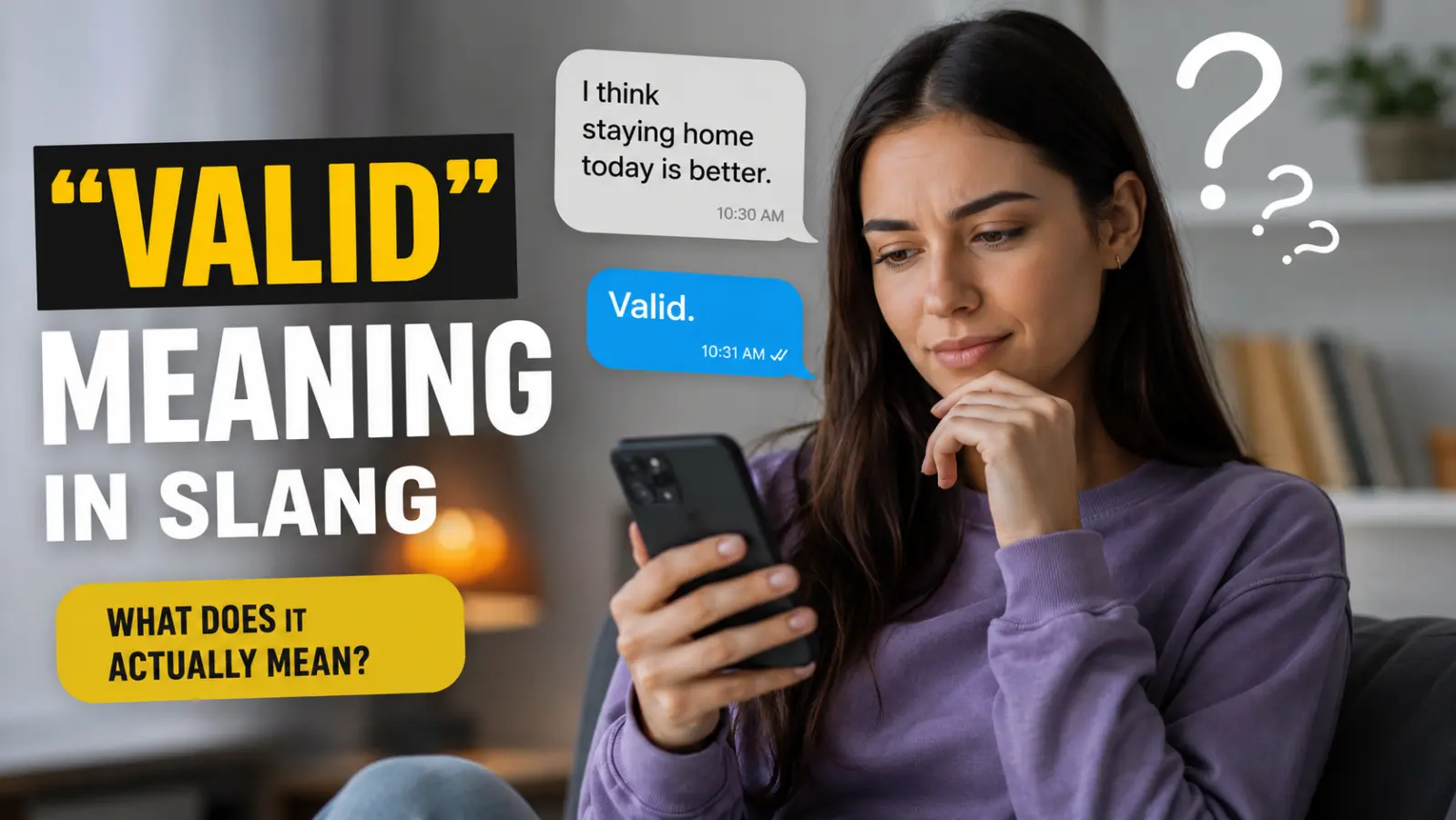
For example:
- “I think staying home is better today.”
→ “Valid.”
This shows acceptance without needing further explanation.
Full form / definition of the slang
There is no official “full form” of valid meaning slang, but in informal usage, it translates to:
- Valid = True / Correct / Legit / Understandable / Approved
So when someone says something is “valid,” they are basically confirming it is reasonable or acceptable in that context.
Related search terms include:
- “valid meaning slang full form”
- “valid meaning slang definition”
- “what does valid stand for in text”
Meaning in different contexts
The meaning of valid meaning slang can slightly change depending on how it is used:
1. Agreement
Used when someone agrees with an opinion:
- “I don’t like parties.”
→ “Valid.”
2. Approval
Used to approve actions or choices:
- “I skipped class because I was tired.”
→ “Valid.”
3. Recognition of truth
Used when something feels true or relatable:
- “Life is exhausting.”
→ “Valid.”
Is it rude, offensive, or neutral?
The slang “valid” is generally neutral to positive.
- ✔ Neutral: Most common usage in casual chats
- ✔ Positive: Shows agreement or understanding
- ❌ Not rude or offensive in normal use
However, tone matters. If used in a dismissive way (“valid… I guess”), it may sound sarcastic.
Where is it commonly used?
The slang valid meaning slang is widely used in:
- TikTok comments
- Instagram captions
- Snapchat chats
- Twitter (X) replies
- Discord conversations
- WhatsApp messages
It is especially popular among Gen Z users and online communities.
Real-life conversation examples
Friendly tone
- A: “I think coffee tastes better at night.”
B: “Valid.”
Casual tone
- A: “I’m skipping gym today, too tired.”
B: “Valid choice.”
Argumentative tone
- A: “You’re wrong about that.”
B: “No, that opinion is valid too.”
Different contexts
- “Your outfit is valid.” (compliment)
- “That excuse is valid.” (acceptance)
Emotional and psychological meaning
Using “valid” often reflects emotional understanding. It shows empathy and acceptance without deep explanation.
Psychologically, it:
- Reduces conflict in conversations
- Encourages acceptance of opinions
- Provides quick emotional validation
- Builds casual social bonding online
It’s a shortcut way of saying, “I understand you.”
Origin and background of the slang
The slang use of “valid” became popular through internet culture, especially on platforms like Twitter and Tumblr in the early 2010s.
Originally, “valid” meant:
- Legally acceptable
- Logically correct
Over time, internet users began using it informally to validate opinions and feelings, and it spread widely across Gen Z communication styles.
Comparison with similar slang
| Slang Term | Meaning | Usage Tone |
|---|---|---|
| Valid | Agreeable / acceptable | Neutral |
| Lit | Exciting / amazing | Positive |
| Fire | Very good / impressive | Positive |
| Legit | Real / authentic | Neutral-positive |
| Bet | Agreement / confirmation | Casual |
While all these slang terms show approval, “valid” is the simplest and most neutral.
When to avoid using it and when to use it
Use it when:
- Talking casually with friends
- Responding on social media
- Agreeing with opinions
- Showing understanding quickly
Avoid it when:
- Writing formal emails
- Academic or professional documents
- Situations requiring detailed responses
- Conversations needing emotional depth
Polite alternatives (if needed)
If “valid” feels too short or casual, you can use:
- “That makes sense”
- “I agree with you”
- “That’s understandable”
- “Good point”
- “I see your perspective”
These are more expressive in serious conversations.
Why people use this slang
People use valid meaning slang because:
- It is quick and efficient
- It fits social media culture
- It avoids long replies
- It feels modern and trendy
- It helps express agreement instantly
Impact of using slang in communication
Slang like “valid” changes how people communicate online:
- Makes conversations faster
- Creates informal bonding
- Reduces emotional tension
- Sometimes causes confusion for non-native speakers
While it improves casual communication, it may not always be suitable in formal settings.
Is it safe for social media?
Yes, the slang “valid” is completely safe for social media use. It does not contain offensive language and is widely accepted across platforms.
However, always consider context, as tone can change meaning.
Common misunderstandings
- Some people think “valid” means “correct answer only,” but it actually means agreement or acceptance.
- Others think it is negative, but it is usually positive or neutral.
- It can be mistaken for sarcasm depending on punctuation or tone.
Variations and types
Some variations include:
- “That’s valid”
- “Very valid”
- “Lowkey valid”
- “Super valid”
These versions add emphasis to the original meaning.
How to respond when someone uses it
If someone says “valid” to you, you can respond with:
- “Glad you agree!”
- “Exactly!”
- “True that.”
- “I knew it made sense.”
Or simply continue the conversation.
Regional and cultural usage
The slang is mostly used in:
- United States
- United Kingdom
- Canada
- Online global communities
It is especially strong in Gen Z internet culture and meme communities worldwide.
FAQs about valid meaning slang
1. What does valid mean in slang?
It means something is acceptable, reasonable, or agreed upon in casual conversation.
2. Is valid a compliment?
Yes, it can be a compliment when approving someone’s opinion or choice.
3. What does valid stand for in text?
It stands for “true,” “acceptable,” or “makes sense” in informal usage.
4. Is valid negative or positive?
It is mostly neutral to positive depending on context.
5. Can I use valid in formal writing?
No, it is best for informal chats and social media only.
6. Is valid still trending?
Yes, it is still commonly used in modern internet slang.
Conclusion
The valid meaning slang is a simple but powerful expression used in modern digital communication. It means something is acceptable, reasonable, or worthy of agreement. Whether used in chats, comments, or casual conversations, it helps people respond quickly without long explanations.
Understanding slang like “valid” is important for keeping up with online culture. However, always pay attention to context and tone, as it can slightly change meaning. In casual settings, it is a safe, friendly, and widely accepted way to show agreement.

I’m Nora Winkwell, a writer who finds magic in humor and charm in clever wordplay. I love creating puns that make people grin and think at the same time. My writing blends wit, warmth, and a playful twist on everyday moments. Through my puns, I hope to spread laughter and a little wink of happiness.