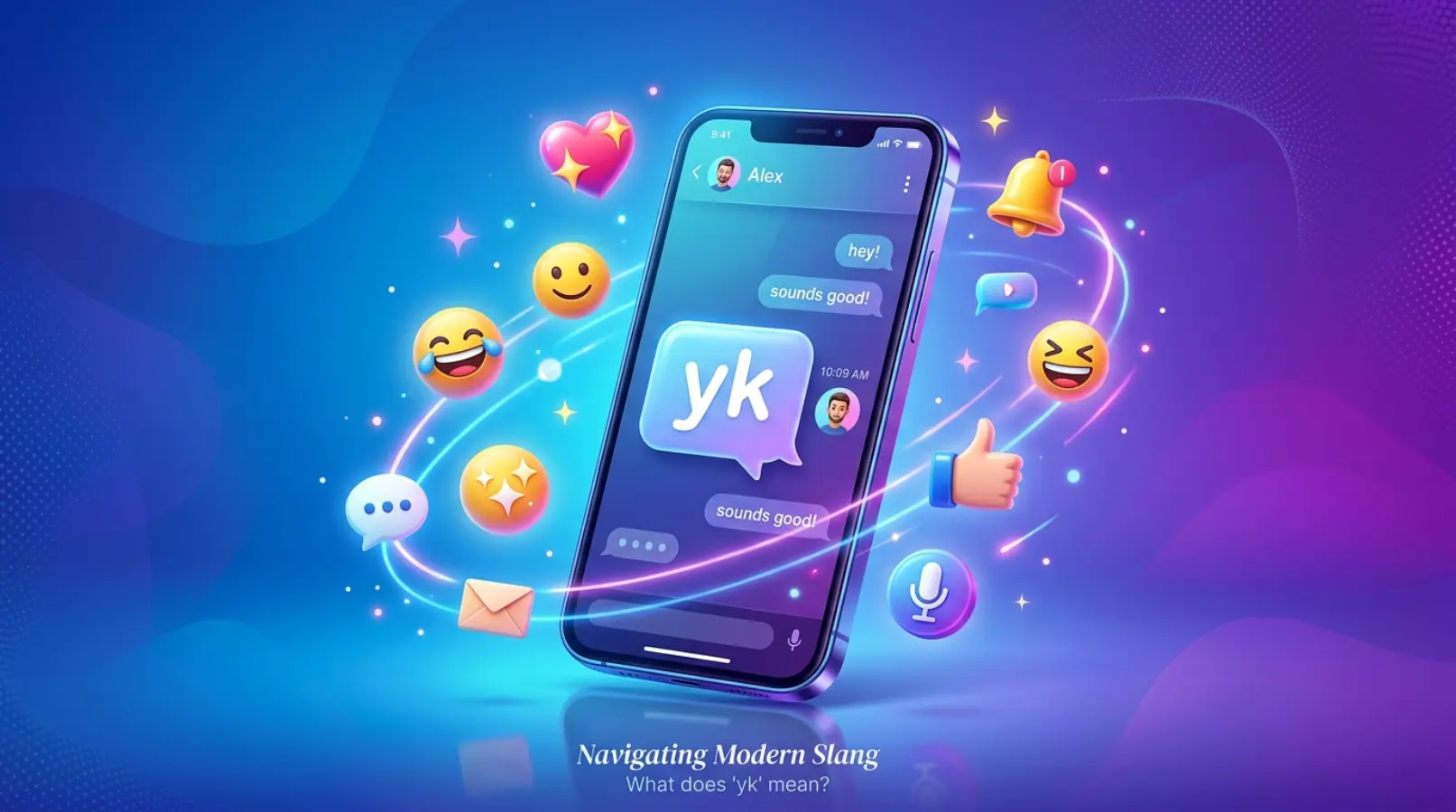
yk meaning in text appears in countless text messages, social media posts, and group chats every day. If you have ever paused after seeing YK in a conversation, you are not alone. This simple abbreviation usually means you know and helps make online conversations feel faster, friendlier, and more natural.
Our Copy Button lets you instantly copy your favorite jokes and share them with friends, family, or social media in just one click. As you enjoy these funny examples, simply tap the Copy Button to save the best lines for your next conversation and spread a little extra laughter.
What yk meaning in text Really Means
Learning the meaning behind internet slang makes conversations easier to follow. These jokes celebrate the funny moments that happen when people misunderstand simple texting shortcuts.
- I thought YK meant Your Kangaroo, so I kept asking where it was hiding.
- My grandma read YK and replied I do not know your cousin.
- My friend typed YK and I answered Bless you.
- I spent ten minutes searching for the YK app before realizing it meant you know.
- My phone knows YK better than my own name.
- Every group chat has one person who pretends YK is a secret code.
- I replied with an entire paragraph because I forgot YK only means you know.
- My autocorrect thinks YK deserves its own dictionary.
- YK is the fastest way to save two whole words and still confuse everyone.
- I told my dad YK and he asked if it was a new TV channel.
- My little brother guessed YK meant yellow ketchup.
- YK walked into my chat and instantly started an identity crisis.
- The shortest message somehow created the longest conversation.
- My friend explained YK using three pages of text.
- Internet humor proves two letters can start a comedy show.
Quick Laugh Tip
A simple texting abbreviation can create the funniest misunderstandings.
Keep your favorite one liner jokes ready for your next chat.
Use the Copy Button to share instant laughs with friends.
Popular Ways People Use YK Online
Texting shortcuts make conversations feel quicker and more relaxed. These funny yk meaning in text jokes highlight everyday online moments that almost everyone has experienced.
- YK saved me two words and cost me five explanations.
- I typed YK so confidently that even I forgot what it meant.
- Every best yk meaning in text story begins with someone guessing wrong.
- My cousin thought YK was a secret club.
- My teacher accidentally ended an email with YK and the class loved it.
- Funny YK moments happen when parents join the family group chat.
- I finally understood YK just in time for everyone to stop using it.
- The internet invents shortcuts faster than I can memorize them.
- My friend uses YK after every sentence like digital seasoning.
- YK turned my simple text into a mystery novel.
- Someone asked for the full form and the entire chat froze.
- I answered YK with OK and somehow passed the test.
- Clever yk meaning in text jokes never get old in group chats.
- Viral jokes often begin with one tiny abbreviation.
- My keyboard deserves an award for predicting YK before I do.
Quick Laugh Tip
Internet humor becomes even better when everyone understands the joke.
Share short puns that are easy to remember.
A quick laugh can brighten any conversation.
Funny Texting Mistakes With YK
Everyone has misunderstood a text message at least once. These jokes turn those everyday mistakes into memorable laughs perfect for puns for social media and humor captions.
- I thought YK was someone’s initials and apologized to the wrong person.
- My friend texted YK and I replied Congratulations.
- The family chat spent twenty minutes decoding two letters.
- I looked up YK on a map before asking anyone.
- My aunt believes every abbreviation is a password.
- YK made my spell checker question reality.
- One tiny text created a full detective investigation.
- My brother said YK stands for Your Koala and refused to change his mind.
- Funny wordplay starts when texting shortcuts meet confused relatives.
- Seasonal humor arrives every holiday when older family members discover new slang.
- I confidently explained YK and accidentally described another abbreviation.
- Someone corrected my explanation and became the group chat hero.
- My phone suggested YK before Hello today.
- Internet slang changes faster than my typing speed.
- The funniest chats begin with someone saying Wait what does YK mean.
Quick Laugh Tip
Texting mistakes happen to everyone.
Turn confusion into laughter instead of frustration.
Copy your favorite joke and make your next conversation even more entertaining.
What Does yk Mean in Text?
The most common yk meaning in text is:
YK = You Know
It is an abbreviation used in texting and social media to:
- Check if someone understands
- Create a casual tone
- Express emotions or experiences
- Seek agreement
- Make conversations feel more personal
Example:
Text: “I’ve been really tired lately, yk.”
Meaning: “I’ve been really tired lately, you know.”
The speaker assumes the other person understands their feeling.
yk Full Form and Definition
Many users search:
- yk full form
- what does yk stand for
- yk meaning slang
The answer is simple:
| Slang | Full Form | Meaning |
|---|---|---|
| YK | You Know | Used for agreement, emphasis, or shared understanding |
Sometimes, in rare contexts, YK can represent other things, but in texting it almost always means “You Know.”
Meaning of yk in Different Contexts
The meaning can slightly change depending on conversation tone.
Casual Conversation
Used to keep chats relaxed.
Example:
“I just wanted a break, yk.”
Meaning:
The person expects understanding.
Emotional Context
Used when sharing feelings.
Example:
“I miss how things used to be, yk.”
Meaning:
The speaker wants emotional connection.
Storytelling
People add “yk” while explaining experiences.
Example:
“I was nervous before the interview, yk.”
Meaning:
They want listeners to relate.
Social Media Captions
Example:
“Sometimes life gets weird, yk.”
Meaning:
Creates relatability with followers.
Is yk Rude, Offensive, or Neutral?
YK is generally neutral and harmless.
It is not considered offensive.
Tone determines how it feels:
Friendly Usage
“Thanks for understanding, yk?”
Sounds warm.
Frustrated Usage
“I already explained this, yk.”
Can sound annoyed.
Sarcastic Usage
“Yeah, because everything is perfect, yk.”
May seem passive-aggressive.
So, context matters more than the slang itself.
Where Is yk Commonly Used?
You may see yk meaning in text across many platforms:
- SMS texting
- Snapchat
- Instagram DMs
- TikTok comments
- Facebook Messenger
- Discord chats
- X (Twitter)
- Online gaming chats
Young users especially use abbreviations to type faster.
Real-Life Conversation Examples
Friendly Example
Person A: “I’ve been busy with work, yk.”
Person B: “Yeah, I understand.”
Casual Example
Person A: “Summer nights are relaxing, yk.”
Person B: “Absolutely.”
Argumentative Example
Person A: “I told you earlier, yk.”
Person B: “Okay, I forgot.”
Emotional Example
Person A: “I feel overwhelmed sometimes, yk.”
Person B: “I’m here for you.”
Funny Example
Person A: “I said one episode only… now I watched eight, yk.”
Person B: “That always happens.”
Emotional and Psychological Meaning Behind yk
People often use “yk” because they want:
- Validation
- Empathy
- Shared understanding
- Emotional connection
- Agreement
Adding “you know” softens statements and makes communication feel more personal.
For example:
Without yk:
“I’m stressed.”
With yk:
“I’m stressed, yk.”
The second feels more emotional and relatable.
Origin and Background of yk Slang
“YK” comes from shortening the phrase “You Know.”
The full phrase existed long before texting. As online communication became faster, people shortened common expressions into abbreviations:
Examples:
- IDK → I Don’t Know
- TBH → To Be Honest
- IMO → In My Opinion
- YK → You Know
Text culture and social media helped popularize these abbreviations.
Why People Use yk in Messages
Users prefer slang because it saves time and sounds natural.
Common reasons include:
- Faster typing
- Informal communication
- Expressing emotions
- Building closeness
- Seeking agreement
- Matching internet culture
Slang often creates a relaxed atmosphere.
Comparison With Similar Slang
Here is a comparison between yk and similar internet abbreviations.
| Slang | Full Form | Meaning | Usage Style |
|---|---|---|---|
| YK | You Know | Seeking understanding | Casual |
| IDK | I Don’t Know | Uncertainty | Casual |
| IMO | In My Opinion | Giving opinion | Informal |
| TBH | To Be Honest | Honesty/emphasis | Friendly |
| NGL | Not Gonna Lie | Personal truth | Casual |
Although similar, YK focuses more on shared understanding.
Variations and Types of yk
You may encounter related forms:
yk?
Means:
“You know?”
Often asks for agreement.
Example:
“It was awkward, yk?”
ykw
Means:
“You know what”
Example:
“Ykw, I changed my mind.”
ykno / ykno
Alternative spelling of:
“You know”
Internet slang changes by region and habit.
Common Misunderstandings About yk
Some people think:
YK = Your Kid
YK = Young King
YK = You’re Kidding
These meanings can appear in niche communities but are uncommon in standard texting.
Usually:
YK = You Know
Context reveals the intended meaning.
How to Respond When Someone Uses yk
Responses depend on tone.
If emotional:
“I understand.”
If casual:
“Yeah, I get it.”
If asking agreement:
“Exactly.”
If confused:
“What do you mean?”
Matching tone improves communication.
Regional and Cultural Usage
English-speaking online communities commonly use yk.
Popular regions include:
- United States
- Canada
- UK
- Australia
- Social media communities worldwide
Younger users tend to use it more than older generations.
When to Avoid Using yk
Avoid using slang in:
- Job applications
- Professional emails
- Academic writing
- Formal business communication
- Legal documents
Example to avoid:
“Please review the report, yk.”
Better:
“Please review the report.”
Formal settings require complete wording.
When It Is Fine to Use yk
Use it in:
- Chats with friends
- Social media comments
- Informal texting
- Group conversations
- Online communities
Polite Alternatives to yk
If you want clearer communication, try:
Instead of:
“I’m stressed, yk.”
Use:
- “I hope you understand.”
- “As you may know.”
- “You probably understand.”
- “I think you can relate.”
These sound more professional.
Impact of Using Slang in Communication
Slang has advantages:
Benefits
- Faster messaging
- Casual tone
- Emotional connection
- Builds familiarity
Downsides
- Misunderstandings
- Confusion across generations
- Appearing unprofessional
Balance matters.
Is yk Safe for Social Media?
Yes.
YK is generally safe on social media because it is not offensive or harmful.
Still:
- Use appropriate tone
- Avoid excessive slang in professional profiles
- Consider audience age and culture
FAQs ;
What does yk mean in text?
YK usually means “You Know.” It adds familiarity or seeks understanding.
What is yk full form?
The yk full form is You Know.
Is yk rude?
No. YK is typically neutral. Tone can make it sound annoyed or sarcastic.
What does yk stand for on Snapchat?
On Snapchat, Instagram, or texting, YK commonly stands for You Know.
Can yk have different meanings?
Rarely, yes. But in most text conversations it means You Know.
Should I use yk in professional emails?
No. Use complete words in formal communication.
Conclusion
Understanding yk meaning in text helps you communicate more naturally online and avoid confusion in chats or social media conversations. In most cases, YK stands for “You Know,” and people use it to express emotions, seek agreement, or create a relaxed tone.
The meaning is usually harmless and friendly, but context affects how it sounds. While yk works well in casual texting, it should be avoided in professional settings.
Knowing when and how to use internet slang improves digital communication and helps conversations feel more relatable and clear.

I’m Max Punson, a writer who lives for clever wordplay and laugh-out-loud puns. I love twisting everyday language into something funny and unexpected. My goal is to make readers grin, giggle, and groan—all at once. Through my pun-filled writing, I aim to keep humor alive, one witty line at a time.