IDM meaning in text is a common search query among people who come across this abbreviation in messages, social media posts, chats, or online conversations.
Internet slang and texting abbreviations continue to evolve, making communication faster and more convenient.
However, not every acronym is easy to understand, especially when the same abbreviation can have different meanings depending on the context.
If you’ve recently received a message containing “IDM” and wondered what it means, you’re not alone.
Understanding the meaning behind internet slang helps prevent confusion and improves communication in both personal and professional conversations.
Quick Answer :
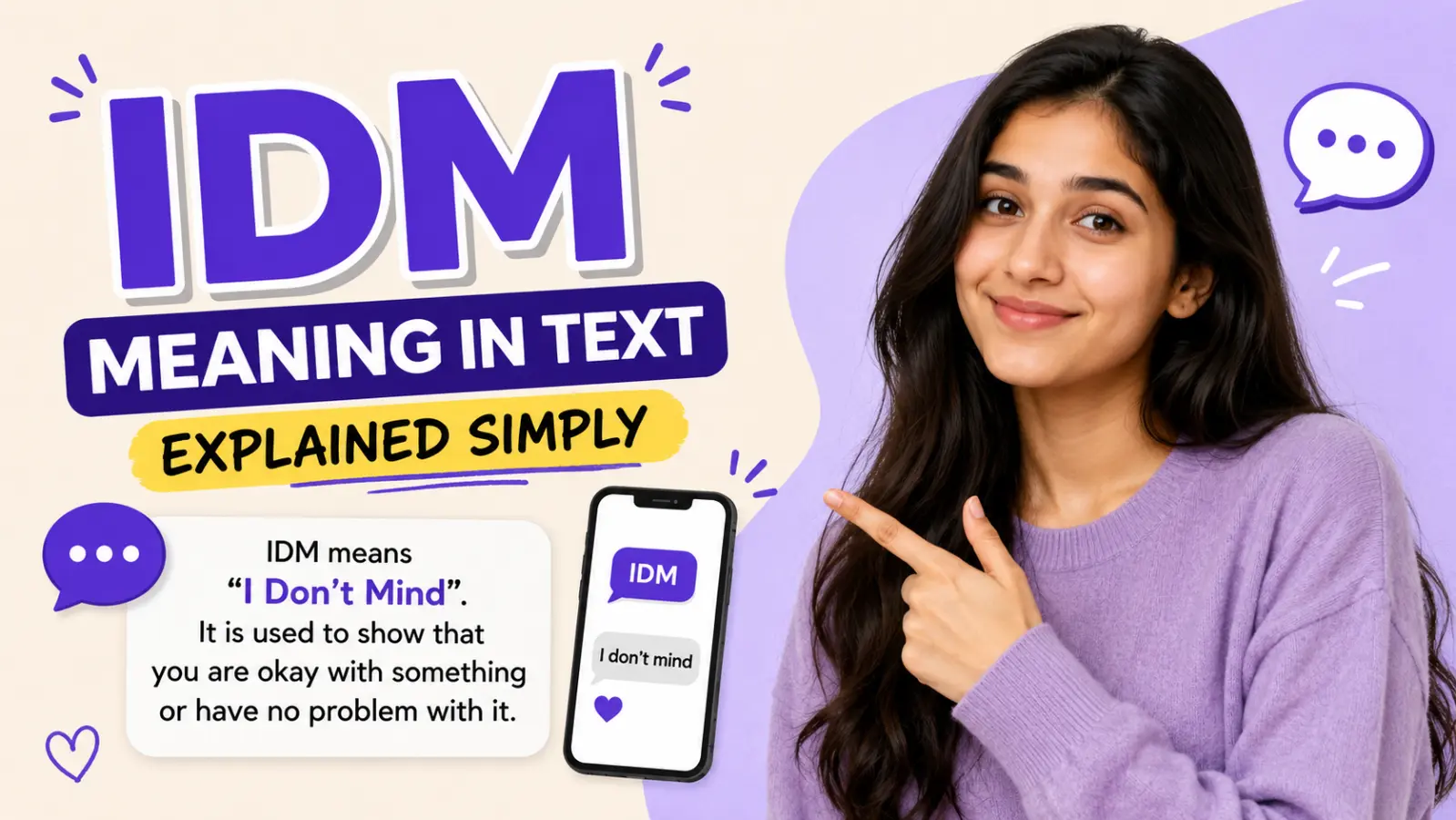
In text messaging, IDM usually means “I Don’t Mind.” It is used to show that a person has no strong preference or objection to something being discussed.
What does idm meaning in text mean in text?
The phrase idm meaning in text meaning in text refers to understanding the slang “IDM” in digital communication. IDM is an abbreviation of “I don’t mind,” which people use when they have no strong preference or objection.
For example, if someone asks, “Do you want tea or coffee?” and you reply “IDM,” it means you are okay with either option.
Full form of IDM
IDM stands for I Don’t Mind
It is a simple and commonly used expression in casual online conversations. Instead of typing a full sentence, users prefer this short form to save time and respond quickly.
Meaning in different contexts
The meaning of IDM remains mostly the same, but its interpretation can slightly change depending on the situation.
- In casual chats: Shows flexibility
- In group decisions: Means no preference
- In friendly conversations: Indicates easy-going attitude
- In quick replies: Suggests agreement without strong opinion
Even though the meaning is simple, tone and timing can influence how it is understood.
Is IDM rude, offensive, or neutral?
IDM is generally neutral and polite. It is not considered rude or offensive in normal communication.
However, the way it is used can change perception:
- Calm use shows cooperation
- Short or repeated use may seem uninterested
- In emotional conversations, it may feel passive
Overall, IDM itself is safe and friendly, but context matters in communication.
Where is IDM commonly used?
IDM is commonly used in informal digital platforms such as:
- WhatsApp chats
- Instagram messages
- Snapchat conversations
- Online gaming chats
- Casual SMS texting
It is rarely used in professional emails, academic writing, or formal communication because it is considered informal slang.
Emotional and psychological meaning
IDM can also reflect a person’s communication style or emotional state.
- Shows relaxed mindset
- Indicates flexibility in decision-making
- May reflect avoidance of conflict
- Sometimes shows lack of strong preference
People who frequently use IDM may prefer simple conversations without unnecessary arguments or pressure.
Origin and background of the slang
IDM comes from early internet chat culture where users started shortening common phrases to type faster. With the rise of SMS messaging and instant messaging apps, abbreviations became a normal part of digital language.
It belongs to the same group of slang as:
- LOL (Laugh Out Loud)
- BRB (Be Right Back)
- IDC (I Don’t Care)
Over time, IDM became widely accepted in casual texting environments.
Comparison with similar slang terms
| Slang | Full Form | Meaning | Tone |
|---|---|---|---|
| IDM | I Don’t Mind | Neutral agreement | Polite |
| IDC | I Don’t Care | Lack of interest | Can sound rude |
| IG | I Guess | Uncertain agreement | Neutral |
| OK | Okay | Simple acceptance | Friendly |
This comparison shows that IDM is one of the safer and more polite slang options in digital communication.
Why people use IDM in communication
People prefer using IDM because it fits modern fast-paced texting habits.
- Saves time while typing
- Makes replies quick and simple
- Shows flexibility in choices
- Avoids unnecessary explanation
- Fits casual conversation style
It is especially useful when someone does not have a strong opinion about a topic.
Impact of using IDM in communication
Using IDM can influence conversations in different ways.
Positive impact:
- Keeps communication smooth
- Reduces decision pressure
- Maintains casual tone
Negative impact:
- May sound emotionally distant
- Can feel passive in serious discussions
- Might create confusion if overused
So, balance is important when using such slang.
Is it safe for social media?
Yes, IDM is completely safe for social media use. It is widely understood and does not violate any platform rules. However, it is better to avoid using slang in formal posts or professional communication.
Examples of IDM in real conversations
Friendly example
A: “Do you want to hang out today?”
B: “IDM, I’m free.”
Casual example
A: “Pizza or burger?”
B: “IDM, you choose.”
Group chat example
A: “Movie night or game night?”
B: “IDM, both are fine.”
Decision-making example
A: “Morning walk or evening walk?”
B: “IDM, any time works.”
Argument situation
A: “Let’s just do it my way.”
B: “IDM, I don’t want to argue.”
Common misunderstandings
Some people misunderstand IDM in different ways:
- Thinking it means ignorance
- Assuming it shows disinterest
- Confusing it with rude replies
- Believing it means “I don’t know”
In reality, IDM simply expresses neutrality and flexibility, not disrespect.
Variations and usage types
Although IDM has a fixed meaning, users sometimes modify it in chats:
- idm bro (friendly tone)
- idm lol (casual tone)
- idm I guess (uncertain agreement)
These variations help express emotions more clearly in informal conversations.
How to respond when someone uses IDM
When someone replies with IDM, you can:
- Make the final decision yourself
- Offer suggestions again
- Choose the easiest option
- Ask for more clarity if needed
Example response:
“Alright, let’s go with pizza then.”
Regional and cultural usage
IDM is used globally in online communication. It is especially common among:
- English-speaking users
- Social media users
- Gaming communities
- Teenagers and young adults
It is not limited to any specific country or region.
FAQs :
1. What does IDM mean in texting?
IDM means “I don’t mind,” used to show neutrality or agreement.
2. Is IDM rude in chat?
No, IDM is not rude. It is generally polite and neutral.
3. What is IDM full form?
The full form of IDM is “I Don’t Mind.”
4. Can IDM be used in formal communication?
No, IDM is only suitable for casual conversations.
5. Is IDM same as IDC?
No, IDM is neutral while IDC can sound rude or uninterested.
6. Why do people use IDM?
People use IDM to reply quickly and show flexibility in decisions.
Conclusion :
idm meaning in text simply refers to “I don’t mind,” a common slang used in digital conversations to express neutrality and flexibility. It is widely used in texting, social media, and casual chats.
While IDM is easy and convenient, its meaning always depends on context and tone. It is best used in informal situations where quick and simple replies are needed. Understanding slang like IDM helps improve online communication and avoids misunderstandings in everyday chats.

I’m Nora Winkwell, a writer who finds magic in humor and charm in clever wordplay. I love creating puns that make people grin and think at the same time. My writing blends wit, warmth, and a playful twist on everyday moments. Through my puns, I hope to spread laughter and a little wink of happiness.